
Author: Aspectus Group

From the Government’s big mini-budget to Labour’s big lead: A defining week for UK politics and public affairs – part 1
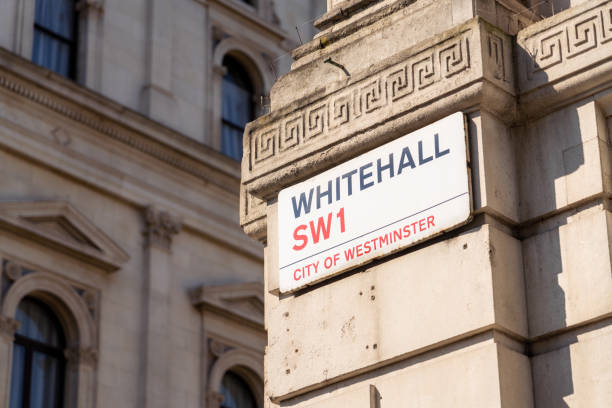

Part 1 of our review of a defining week in UK politics, which will have significant impacts for businesses in Energy and Industrials, Tech, Capital Markets and Financial Services. 

Part 2 can be found here.

The Government turns from its record, and the markets take a turn for the worse

The old cliché is that a week is a long time in politics. Just a week ago, Liz Truss’s new Government presented its ‘Growth Plan 2022’. Despite being dubbed a ‘mini-budget’, there was nothing mini about it: this very big fiscal giveaway contained £45bn worth of tax cuts – the biggest such package in about 50 years.

Business groups initially welcomed the cuts to Corporation Tax and National Insurance, which had been promised throughout Liz Truss’s leadership campaign. But it was the announcement of additional tax cuts, like the (quickly reversed) abolition of the 45p top rate of tax, that really surprised the markets, and upset MPs and voters. The cut solely benefited the highest earners – which in the context of high Government debt and a cost-of-living crisis astonished most independent commentators. Even the IMF has criticised the package in an extraordinary warning to a G7 country.

All of these tax cuts appear to be funded through additional borrowing. Without the normal oversight provided by the Office of Budget Responsibility, there is little clarity into the long-term impacts on government finances. Sound money or fiscal responsibility is at the core of the Conservative brand, but suddenly Liz Truss’s new government appeared to be acting recklessly with the country’s finances.

The pound’s value tumbled immediately, and within days a run on government bonds became a fire sale that nearly toppled a number of pension funds, the Bank of England has had to buy up unlimited amounts of government debt, and banks pulled hundreds of mortgages from the market in anticipation of soaring interest rates, as analysts warned of precipitous falls in housing prices.

A stark change of direction

While the pound appears to have rallied since the Bank of England’s intervention, this does not bode at all well for a government that is less than a month old. But since the Brexit referendum in 2016, UK politics has become increasingly unstable: the UK has now had four Prime Ministers in a little over six years.

The new Truss government is determined to distance itself from its predecessors, with very little policy continuity between them. Both of Boris Johnson’s main post-Brexit agendas have been shelved: ‘Levelling up’ – the mission to use infrastructure investment and devolution to spread prosperity more equitably around the country – has been more or less forgotten (though it lives on as a slogan). And the future of the green agenda is now in doubt after the appointment of several climate sceptics to the Government front bench.

What has taken the place of these agendas is a headlong pursuit of economic growth: a review of the Net Zero strategy has been ordered by the new climate-sceptic Business Secretary. And growth is no longer a vehicle for levelling up: the new Chancellor has said plainly that his sole priority is growing the economy, not worrying about how the gains are shared. Now the Government defines itself in contrast to its predecessors, reversing most of the fiscal policy of the last government, and criticising the last decade as a ’vicious cycle of stagnation’.

The Chancellor believes that his approach – of cutting taxes first, and pushing through supply-side reforms to areas like the planning system, business regulations, childcare, immigration and digital infrastructure later – will create growth, and get the UK on course for a new 2.5% annual growth target. But observers inside and outside the Conservative party are sceptical.

Time is running out

Financial markets are not the only ones to take fright at the Government’s fiscal package. Conservative MPs really don’t like it either. They mainly backed Liz Truss’s leadership rival, Rishi Sunak, who accurately predicted the response of the markets to Truss’s tax-cutting pledges. Now there are all kinds of nuclear options under discussion amongst Tory MPs: there are reports that letters calling for a no-confidence vote in Liz Truss have already started to go in, with other MPs reportedly in secret talks with Labour about how to defeat the Government’s must-pass Finance Bill. Losing such a vote would be the death knell for the Government, and it could lead to a General Election. Readers should take all of this with a pinch of salt, however – despite the extraordinary anger on Conservative benches, MPs are unlikely to vote for their imminent unemployment, given the likely outcome of such an election.

Ultimately the most critical constituency for the Government – voters – seems to have moved decisively against the Government too. Polling in the days since the mini-budget has shown the Conservatives losing their usual lead on economic policy – normally their strong suit – along with nearly every other issue, and losing ground to Labour in voting intention. Labour has now built up a solid lead from every polling company, which if repeated at a General Election, would likely produce a majority Labour Government. With two years to the next election, at most, the Government has limited time to prove that its radical free-market policies can work.

Part 2 can be found here.

Dan Hogan is Aspectus’ Public Affairs Lead. He is at Conservative Conference this week, gathering insight into key policy areas affecting Energy and Industrials, Tech, Capital Markets and Financial Services, and spending time with the key decision makers whose choices affect your business. If you want to know more about how Aspectus’ Public Affairs team can help you, get in touch.

Related News

GA4 migration: planning a smooth transition


By Anna Fishlock, Co-head of the Digital team

You may have heard the news or seen the notice at the top of your Google Analytics account:, Google’s newest version of analytics, Google Analytics 4 (GA4), is now available and has been for some time. GA4 is the latest version of Google Analytics; a free to use website and application measurement platform provided by Google, which enables you to measure traffic and engagement across all your websites and apps.  

By July 1st 2023, Google will no longer be processing data for websites using the existing Google Universal Analytics (UA), all properties will be upgraded to GA4. With an estimated 26 million websites currently using Universal Analytics, this means UA will no longer receive data from your website.  

What does this mean for the future of Google Analytics?

GA4 has been developed to better focus on customer privacy data due to the implementation of GDPR and CCPA (California’s Privacy Act). Crucially it now includes privacy controls such as cookieless measurement which is important as Google is phasing out third-party cookies in 2023. GA4 will start reducing the reliance on cookies to record data; therefore, preventing any future gaps in the data.  

Events Vs session-based data

A major change in GA4 is the standard usage of events rather than session-based data. Previously in Universal Analytics, you would have to define your custom events through Google Tag Manager for websites and view them in a separate events or conversion reports. The reason this change needs to happen is to gain parity between website and application-based properties so measurement can be combined and viewed in a single Google Analytics property. Also, by focusing on event data we will have a more insightful view into a customer journey on websites; GA4 is capable of tracking what buttons customers click/tap or how far they scroll down a page/screen.  

What does it mean for my business?

Not making this move over to GA4 can have a huge impact on your business. After a certain date, which is yet to be confirmed (but it is thought to be either end of 2023 or early 2024), you will no longer be able to access any of your Universal Analytics reports; all properties will be completely unavailable. Therefore, making the move to GA4 as soon as possible allows you to build the necessary historical data that your business needs and you’ll also benefit from its new tracking features too.  

What’s the rush?

While it sounds as though we still have a year to prepare for GA4, we’re encouraging our clients to familiarise themselves with the new dashboard and all the new options available to track data. Google currently plans to keep the historical UA data in its own property but we are still helping our clients download historical data so this can be stored safely as a back-up in case Google completely removes all UA properties in future. 

How can Aspectus help?

Although it sounds like a daunting move across to GA4, it doesn’t have to be. Our acquisition team is already supporting our clients to make the transition as simple as possible. Feel free to get in touch with one of our acquisition specialists if you would like more information.   

Related News

Let’s ‘BeReal’ about how to build brand awareness and attract talent


By Account Director on the Financial Services team, Louise Veitch.

Depending on which side of the millennium you were born on, it is possible you will have had a different reaction to BeReal. But no matter the lap around the sun, you will at least know of the new viral app, and if you are a digital marketeer or business owner, age is just a number and BeReal is to be embraced.

The app which shares a notification with all users at a different time each day, asks you to take a photo (an automatic selfie and the view through your main phone camera) within two minutes of opening the social media platform. It’s designed to celebrate the mundane and everyday – but importantly – it peels away another layer into the personal lives of those you do and don’t know, and for whatever reason, we can’t get enough. Although the anti-instagram app launched in 2020, it has only gone viral in the last four weeks. Some will say the success can be attributed to their Series A funding last year, others that social media users have become tired of heavily edited snaps showcasing holidays or weddings all Summer. But maybe, just like Bebo, MySpace and Facebook before it, Instagram as a social media platform, is entering the winter of its popularity.

And while the premise to encourage users to ‘be real’ seems authentic for now, the app has all the foundations for being a legitimate digital marketing channel for businesses. Yes, it currently prohibits product promotion, which does limit scope. But even if this doesn’t become more flexible in the future, BeReal still has the potential to drive brand awareness for businesses or key spokespeople and recruit the next generation of talent. Brands have the opportunity to build their personality and online presence by posting behind the scenes shots of the inner workings of the business. This is key, because as a population, we are obsessed with celebrities and CEOs. And while Instagram gave us access to the curated images on their camera role, BeReal offers us an even deeper insight into the day to day lives of the people we don’t know, but really want to.

The non-believers out there are saying it’s a fad – so don’t dismiss your social media influencers just yet. However, do consider the benefits of building a profile on this app now, so you’re not showing up to the party much later – like you almost certainly did with tiktok.

Related News

Media training: How do the Tory leadership election candidates stack up


By Catherine Hunter, Energy team Account Director

As we approach the results for the Conservative leadership election, there’s been significant scrutiny on the candidates’ policies around the NHS, environment and taxes. But there’s been a lesser focus on their media techniques.

Liz Truss has openly admitted she isn’t as well polished as a public speaker as her rival, Rishi Sunak, but what tips and tricks could both candidates look to work on as they steer the country into their direction as Prime Minister?

Bridging

Bridging is a technique that helps you move from one area of conversation to another. The approach works best when the question asked is answered – or at least in part – before moving onto a slightly different conversation point.

In this interview with Nick Ferrari, Sunak is asked about his image in politics. He’s challenged on both appearance and pulling pints while being tee-total. Rather than saying simply, “I should be judged on my ideas” Sunak acknowledges some of the criticisms given before saying, “this is about what I’m going to be able to do for the country” and he then uses that line to bridge into some of the core values of the party and how he supports them.

However, in this clip, Truss directly fails to answer the question on the emotions she’d feel around launching nuclear weapons. After failing to answer the question once, it’s repeated and the same soundbite of “I’m ready to do it” is given. And while the audience response clearly shows this is a popular reaction to the question, Truss could have deployed the art of bridging to make this stronger. Even simply saying, “I’m sure I’d be feeling a lot of emotions, but it’s a part of the job I’m ready to do.” This is still allowing that soundbite to come through but gives the sense the question is answered.

The bridging technique works well for both parties in a media dance. The interviewer gets an answer, but the interviewee can also steer the conversation towards an area they feel more comfortable in – or in this case – get some key vote winning ideas across.

However, when taking a question from the public around jobs in the cabinet, Truss performs an excellent display of different two techniques. The first is bridging, where she responds to the need for a “leaner” cabinet by rejecting that idea but calling for a leaner Number 10.

Underscoring

The other technique displayed here is underscoring. Truss acknowledged Kemi Badenoch could be in her cabinet at the start of her answer before she returns to Badenoch and her credentials. Underscoring the point that she’s a good fit for a cabinet post.

And while Truss does this well, Sunak clearly details vulnerable customers as a dividing line between him and Truss on energy bills. Not only do we notice a return to that theme at the end of this clip, he also uses changes in tone to draw attention to the words “vulnerable” and “pensioners”.

Underscoring is an invaluable tool to making sure the key messages you’ve worked on are the lasting memory for the interviewer.

Signposting

There are, however, times when the topic being discussed is very narrow in its focus and you want to introduce a new idea entirely. This is where signposting becomes important.

After taking a few questions on the public sector pay and her revoked policy, Truss sees an opportunity to move the conversation onto the wider topic of the cost of living in this interview with Kay Burley. The back and forth on public sector pay isn’t really moving forward and so it’s Truss that makes the decision to move the topic on, which Burley follows and questions on cost of living follow. This is arguably safer ground for Truss as there wasn’t a political U-turn on the issue to defend.

Both candidates will have a set of key messages – some even in the form of soundbites – they intend to get across to media and the effective deploying of signposting is a great way to bring them into a debate or interview that would otherwise not cover key topics.

And while being the best public speaker, or media performer, is unlikely to be the only reason a candidate becomes the favourite, it helps to ensure key messages resonate.

If you’d like to hear more about how media training could help your key messages land in your next campaign, find out more here.

Related News

Cooling cities: regrowing our urban green spaces


By Jessica Ginting, Account Manager, Energy team

As global temperatures continue to exceed records annually, urban heat islands are exacerbating the problem of summer heatwaves to dangerous levels. 

Demand for air-conditioning is rising in countries unequipped with indoor cooling systems, including the UK. However, this could come at a cost for energy efficiency and sustainability gains. It’s been estimated that by the end of the century, air conditioning could increase the UK’s power consumption by up to an estimated 15% during the summer. Worldwide, air conditioning accounts for about a fifth of the electricity used in buildings and is a major source of greenhouse gas emissions 

Is there another way to keep our cities cool while still maintaining a path to net zero?  

Nature as climate resilient infrastructure


Green spaces can mark a difference in temperature in an urban area by several degrees, but to truly see results on a wide scale, this relies on robust urban planning and green policies. 

Rocky Mountain Institute, as an example, outlines a 3-step, whole-systems approach to urban cooling: 

  • Reduce heat at an urban scale 
  • Reduce cooling needs in buildings 
  • Serve cooling needs in buildings efficiently 

So, in order to reduce the cooling loads in buildings, cities should first be reducing heat at an urban scale, by exploring urban form and design, nature-based solutions and cool surfaces. 

On average, plants reflect more solar radiation than pavements do. Apart from creating shade and preventing too much heat from being stored in substrates or facades, plants can also extract heat from their immediate surroundings through evaporation.  


Mendellín, Columbia’s green corridors


After experiencing rapid, unplanned growth that eliminated green spaces and created significant urban heat islands, the 2016-2019 Government Plan of the Mayor’s Office of Medellín, Columbia set goals to make the city healthier and more sustainable under the “Medellín, Environmental Urbanism” project. As a result, the city created green corridors that would follow and restore the geography of the area prior to recent development.  

From 2016 to 2019, the city created 36 corridors, 18 along major roads and 18 along waterways, covering over 36 hectares. Studies confirmed that areas with the least green spaces had the highest temperatures, so green corridors were focused on these areas. The areas with green corridors have already seen temperature reductions of up to 4°C. 


Green cities and equality


According to research from the University of Manchester, minority groups are four times more likely to be in neighbourhoods most vulnerable to extreme heat. Low-income neighbourhoods are also likely to be hotter than more affluent areas. Creating and maintaining green spaces in cities can also be costly, and not all communities can afford them. Local governments need to ensure that their greening plans won’t be concentrated in areas designed to attract wealthy residents and tourists. 

One result of the pandemic is that cities such as London are recognising the importance of their green spaces. Initiatives such as the 2022 Grow Back Greener Fund will support London’s communities to plant trees to provide shade, create and enhance green space and increase climate resilience. It prioritises areas where Londoners live further than a 10-minute walk from their nearest green space and are at a high climate risk. 

It’s becoming clear that cooling infrastructure, including the increased adoption of air-conditioning, is not a luxury but a necessity in today’s warming world. As the rate of rising temperatures continue to accelerate, we must consider ways of prioritising nature-based solutions that will keep our cities cool while maintaining our path to net zero. 


Related News

ESG comms: sincerity can silence sceptics


By Ophelia Jeffrey, Senior Account Executive 

A collective ambition for a more purpose-driven approach to business has propelled environmental, social and governance (ESG) issues up the agenda. To the extent that businesses hoping to remain competitive must now adopt a strong position on these issues or risk being labelled a laggard. 

And whilst a company might be making sincere efforts to factor good ESG practices into its wider business strategy, navigating the most effective way to communicate this undertaking without selling it short – or overstating its impact – is a very real challenge. There are reputational risks associated with doing both too much and too little, which can feel something like being stuck between a rock and a hard place – but with an effective communications plan, it’s possible to strike the right balance. 

The term ‘ESG’ has rightly attracted its fair share of sceptics – any term that’s associated with such hype requires sufficient scrutiny – but at Aspectus, we believe that whilst it’s likely to evolve considerably in the coming years, ESG is more than a passing fad.  

It follows then that businesses should be looking to incorporate strong ESG practices into their core strategies before they’re forced to – either by the demands of a regulator, or the ever-rising expectations of their own customer base. 

So, to help businesses as they consider how to effectively communicate their ESG strategies, or begin to devise one from scratch, we’ve pulled together five top tips for best practice: 

Be sincere

It’s essential to avoid either under or over claiming the impact of your work – as mentioned, both could do serious reputational damage. Under communicate and you risk alienating stakeholders, but over communicate and you could open yourself up to serious greenwashing allegations. Instead, be sure to contextualise any achievements within the business’ broader journey towards further progress, which will demonstrate both the business’ ambition and credibility. 

Provide proof

The best way to show stakeholders that your ESG claims are legitimate is to show them the evidence. That means setting targets that are clear and measurable in the first place and then centring your communications strategy around those proof points. If data isn’t available, then being as detailed as you can about your methodology is essential.

Stick to your promises

Establishing accountability is one of, if not the most, important factor when it comes to devising a credible ESG comms plan. Issuing plans early and publicly will make the achievements all the more impressive, demonstrating both forethought and follow-through. 

Regularly review your messaging

Done right, ESG should be incorporated into a business’ core strategy, operations, and values not tacked on as an afterthought. As such, from a communications perspective it’s important to revisit the company’s messaging when devising an ESG strategy. Whether an ESG commitment alters your company’s mission statement or enhances it, it’s essential that it’s reflected within the overall messaging at every level. 

Consider a dedicated ESG report

Increasingly, an annual ESG report has become a popular way to evidence the impact of a strategy and it has the advantage of helpfully mirroring an annual financial report, which visually elevates ESG on to an equal footing with more traditional measures of corporate performance. However, considering the importance of creating continuity as mentioned in the tip above. So it’s important that ESG still appears core to the business at an everyday operational level and not simply an annual status check that ticks a box. 

An effective ESG communications strategy can seem like a delicate balancing act but living up to these new expectations in business stands to benefit both planet and profit. 

If you’d like to dig deeper into our recommendations for best practices when it comes to ESG communications, we’ve recently published a whitepaper drawing from expertise across our five sectors, which is available to download here. 

Related News

Can Aberdeen become the Net Zero Capital of Europe?


Jamee Kirkpatrick, Account Director in our energy team
Aberdeen has been hailed as the ‘Oil and Gas Capital of Europe’ for decades and latterly the ‘Energy Capital of Europe’, but that could all be set to change.  

Recently, in a bid to gain Green Freeport status of its regional port alliance including Peterhead Port Authority, Port of Aberdeen, Aberdeen International Airport and both Aberdeen City and Aberdeenshire councils, the city is eying up a new title – the ‘Net Zero Capital of Europe’. 

For many, the goal of achieving net zero by 2050 has been misunderstood by the general public. While it does mean increased urgency to phase out fossil fuels, it is very unlikely that they’ll be completely eliminated in the near future, particularly when you consider how many byproducts of oil there are.  

There is light at the end of the tunnel though, with high levels of investment, research and development (R&D), and testing in place to ramp up scalable green alternatives for hard to abate sectors. One only needs to look at the increase in electric car sales, production and supporting infrastructure in recent years as evidence.  


So, what does Net Zero mean?

The key to understanding net zero is to focus on the ‘net’ part. We’re not talking about absolute zero here – a world where there are literally no emissions – but rather one where emissions are reduced as close to zero as possible, and the remainder are re-absorbed from the atmosphere or offset by carbon negative activities such as carbon removal. 

The heightened imperative of reaching net zero has required supermajors to assess their energy mix and, in particular, their green energy portfolios such as wind, solar, carbon capture and hydrogen. Several oil majors have announced that they will stop exploration, but they have not committed to stopping production due to demand, particularly in view of energy security pressures. Instead, they are looking at:  

  1. how they can reduce emissions of their existing assets, such as electrifying assets or eliminating fugitive emissions and;  
  2. how they can offset the impact of their current ‘dirty’ operations, with green projects, such as offshore wind. 


Where does this leave Aberdeen?

Transition isn’t a new concept for the city. In 2015, the UK’s first hydrogen production and bus refuelling station opened in Aberdeen, and now you can barely see a bus pass by that isn’t hybrid. Even before that, in 2012, bus fleets went hybrid with the introduction of electric buses on all major city and shire routes. Aside from transportation infrastructure, the Scottish Government recently launched a £10m hydrogen initiative which will see investment in hydrogen technology development and exports from the region for which Aberdeen is primed to support.  

Aberdeen is also home to the European Offshore Wind Deployment Centre (better known locally as Aberdeen Bay Wind Farm) which is an offshore wind test and demonstration facility. The local Acorn Project, which will utilise existing oil and gas infrastructure such as pipelines, is on track to become Scotland’s first operational carbon capture and storage (CCS) facility, despite recently losing out on government funding back in 2021.   

These are just a few examples of transition in the city. On top of CCS and renewable energy, there’s also traditional oil and gas transition, such as well abandonment and decommissioning to consider, which will take decades to complete.  

Aberdeen’s legacy in oil and gas, married with its commitment to a net zero future, makes it really quite unique as an energy hub. A wealth of knowledge, expertise and experience is met with technology, innovation and a willingness to not only embrace change – but thrive in it. In fact, trade bodies such as Oil and Gas UK and The Oil and Gas Technology Centre have rebranded to Offshore Energies UK and Net Zero Technology Centre respectively to support the city’s growing diversity in the wider energy mix.  


So, is Aberdeen primed to be the Net Zero Capital of Europe?

There’s no reason why not – Aberdeen, as noted above, has a remarkable ability to adapt and excel. But as a city that has been left to its own devices for far too long, it will require help. National and local government support to transition traditional oil and gas workforces is needed, as well as funding and investment to aid infrastructure and technology development to allow SMEs in the traditional supply chain to adapt.  

Real investment and time will be required to ensure that the city isn’t left behind or forgotten. Given the opportunity, Aberdeen can cement its place in the net zero journey and even offer further stability for the city than it did in the ‘boom’ days of oil and gas. The wider energy industry, globally, can also learn from the knowledge held within the Granite City.   

Transition isn’t a buzzword, it’s something that Aberdeen is actively pursuing and doing, so the goal of becoming the Net Zero Capital of Europe is in reach – but to cross the finish line, collaboration, investment and innovation are required.  

Related News

How can we bridge the gap until the energy transition?


By Paul Noonan, Lead Copywriter

The EU was long heralded as the world leader in renewables yet it is now reviving fossil fuel projects and even reopening coal power plants in the wake of an unprecedented energy security crisis.  Russia’s recent strangulation of natural gas supplies to the EU means the dilemma of how to build an affordable, secure ‘bridge’ to the energy transition has once again reared its head. And the global renaissance of oil and gas production has now left many fearing that the Ukraine crisis has heralded a permanent return to fossil fuels that could undo the progress of COP26.  

The collapse of the bridge to renewable energy

The EU’s rush to renewables relied heavily on interim imports of natural gas as a bridge to the energy transition, yet this bridge is now collapsing under a perfect storm of circumstances. The closure of much of the EU’s coal power capacity meant replacing a domestically produced dispatchable energy source with natural gas to fill the gaps from fluctuations in wind or solar supply. This left Europe uniquely vulnerable to the trifecta of a 15% slump in global windspeeds that slowed wind power production, a post-pandemic surge in energy demand from Asia and geopolitical conflict with its major gas supplier Russia.  And analysts warn that we are still a decade away from having enough green hydrogen, utility-scale batteries or carbon capture utilisation and storage to fill in for fluctuations in wind and solar. With Europe still reliant on Russia for 20% of its gas, there is now an urgent imperative for other short-term solutions to fill the void. 

European countries have signed new deals to import natural gas from Qatar, Algeria and Egypt and new fossil fuel projects and pipelines are being revived across Africa. Yet there is a fear that, far from being a bridge to renewable energy, new fossil fuel projects could become a permanent bridge to nowhere. Some have warned the rash of new fossil fuel projects will either lock in global warming forever or leave an array of massive, stranded assets as the tide of demand recedes in favour of renewables. 

An alternative path to renewable energy

Yet could there be an alternative bridge to the transition that avoided the need for long-term fossil fuel production or expensive new assets while alleviating the current energy security crisis? 

New lean engineering innovations such as portable Mobile Offshore Production Units (MOPUs) now enable short-term development of small oil and gas fields in shallow waters without the need for permanent platforms. These low-cost solutions could make it economically viable to develop marginal fields in regions such as Africa with abundant shallow water sites, fulfilling our short-term energy needs until renewable storage solutions are ready. 

And countries from Angola to Nigeria have also been using lightweight Minimum Facilities Platforms or Conductor Supported Platforms as a low-cost way to develop oil and gas fields at speed without huge conventional jacketed support structures. Their lean design means they can be manufactured and assembled without big facilities or fleets, reducing lifecycle emissions. And these modular, modifiable designs could even be adapted for future offshore wind applications, creating a circular economy of assets that provides both today’s energy supplies and tomorrow’s renewable energy replacements.   

And in the downstream market, digital twins, data analytics and machine learning systems are enabling refineries to reduce downtime, extend their lifetime and safely scale up production. This could help existing refineries boost output without building new ones until the energy transition is complete. Similar technologies are being used to extend the lifespan of existing offshore oil and gas platforms without building replacements, freeing up capex for investment in offshore renewables. Meanwhile in the renewables industry, innovations from carbon capture and storage to green hydrogen could provide the large-scale storage needed to accelerate the transition. 

The key is to ally these innovations with a strong communications campaign that promotes how technology can both aid future decarbonisation and provide a smooth and swift transition to clean energy.  

Related News

A guide to integrated PR and marketing for edtech companies


By Stacey Cockram, Senior Account Manager

At Bett 2022 this year (one of the world’s biggest education technology shows), I was inspired by the conversations I had around creativity, potential and the future — themes that are quintessentially ‘edtech’.

Among the hundreds of competing vendors exhibiting at Bett, everyone shares the same goal: to transform education. Although this collective goal is impressive, on an individual level it’s hard for edtech companies to cut through the noise. Everyone is trying to be the next big thing, but how do you prove you are?

My advice to edtech companies looking to stand out in an increasingly crowded market is to take advantage of integrated communications. Here’s what I mean by that.

Channel the momentum of a booming industry by starting with plan

The global edtech market was estimated at $237.6 billion in 2021 and by 2030, it is expected to reach $998.4 billion. There’s clearly a great opportunity here, but to capitalise on it, edtech firms must have a clear brand strategy, underpinned by the key messages they want to be known for.

Messages form the foundation of all communications and marketing. Once these are established, think about the industry conversations you want to be involved in, then, each month, plan activities in line with this.

For instance, in June, during London’s edtech week, writing a blog for your website and promoting it via social media and in email signatures could boost engagement. Preparing a comment to pitch to journalists for A-level results day in August, is a great way to secure top tier coverage.

Creative comms inspired by learning technology

Edtech – and particularly learning technology, which encompasses e-books and coding to VR and robots – is inherently creative. Your edtech PR and marketing should be too.

Back in 2011, an ‘imaginative thinking’ test commissioned by NASA found 98% of children between 4 and 5 ranked as creative geniuses. After entering the education system, by the age of 14 and 15, this had fallen to 12%. Less than 2% of the adults tested were creative geniuses.

As adults, some of us lose our creative spark, but that’s no excuse when it comes to communications. Just like edtech is bringing a burst of life into the classroom and nurturing creativity, the same attitude can be applied to PR and marketing. You must be distinctive and bold to make an impact. However, it isn’t necessarily about wacky, budget-consuming campaigns like floating a giant rubber duck down the Thames, it’s about creating ideas that are firmly tied to business results and what your audience cares about. At Aspectus, we call this “considered creativity”.

If your company lacks brand awareness, you’ll want to create a campaign that truly captivates your audience. For example, you could talk around an industry trend like the problem of getting buy-in from teachers and make your mark on the topic by tracking how educators of different generations embrace education technology – we all remember the teachers who struggled with interactive whiteboards. After your research you could create a whitepaper, gate it on your website to capture leads then promote this via a LinkedIn campaign targeted at CTOs in education, as well as aim to secure a keynote spot at relevant conferences – like Bett or Digifest

Amplification and integration – the champion of classrooms and communications

Edtech has the potential to transform our education systems, but only if it becomes fully integrated into our classrooms. Technology on its own won’t work, there must be training and buy-in from schools and students. What’s more, if schools are to create a winning learning environment, they should embrace all aspects of edtech – from interactive lessons and apps, to automating reporting systems and safeguarding.

Similarly, marketing teams cannot rely on one channel alone to achieve their goal. It’s not just technology PR, the industry must integrate all marcomms efforts. Sending out a press release and expecting the right publications to cover it isn’t enough.

Integrated campaigns combining demand generation, social media, PR and more (!) help you stand out, whether your goal is brand awareness or getting leads. It’s about taking one idea and making it cohesive across all channels like a company’s website, its social media and the press. And, even if you are getting great coverage, but your company isn’t found on Google, you’re missing a trick. SEO and ranking high on specific keywords is crucial.

Ultimately, a successful PR and marketing strategy for an edtech company will reflect the ethos of the industry it belongs to – focused on the future, creative and working best when integrated.

If you’re an edtech firm looking for PR and marketing support, get in touch with stacey.cockram@aspectusgroup.com

Stacey is a Technology Senior Account Manager, with a degree in Education from Durham University.

Related News