What to do after you leave school is a question that many students consider. Is university the right decision for them? Or is getting hands on experience in the form of an apprenticeship the way forward? Below are three key benefits of why an apprenticeship could be for you.
1) Hands on experience
Hands on experience in a real-world setting is important in any industry you go in to, and an apprenticeship can provide just that! It is invaluable for understanding the fundamentals of PR and developing the skills necessary to succeed within the sector. You are given the opportunity to work alongside experienced professionals, learning how to craft effective press releases, pitch stories to media outlets and communicate efficiently. Similarly, an apprenticeship in digital marketing would provide you with the chance to learn about SEO, PPC, and social media advertising.
Learning happens when you’re doing. Actively performing these tasks will allow you to get an idea on the things you are confident in and enjoy but more importantly, the things you struggle with as well. Hands on experience allows you to identify the sectors in which you may not be as familiar with and quickly receive help from the professionals around you.
2) Building connections
Secondly, building connections is crucial in the corporate world. Although important in any career, it is particularly key in an industry as competitive as PR and digital marketing. Having a network in the industry will open doors for future job opportunities, as well as providing a sounding board for your ideas and a source of feedback on your work – things that may be difficult to obtain in a university setting. Building these relationships early on can give you a massive head start and a greater window for success in the future.
Most apprenticeships allow you to attend industry events, connecting you with other PR and marketing professionals as well as potential clients – this is another way to expand your network and gain valuable knowledge in the field.
3) Earn while you learn
Unlike a traditional degree, an apprenticeship allows you to earn while you learn. This helps eliminate the financial burden of a student loan, which according to the UK Parliament website, is forecasted to be around £43,400 on average, once students complete their course in 23/24. So instead of completing university at the cost of a £40,000 debt, you could be completing your apprenticeship with extra cash in the bank!
Additionally, many apprenticeship programmes also provide training and support that can help you pass any industry-specific qualifications such as the Chartered institute of Public Relations (CIPR) diploma or the hundreds of digital marketing courses online.
An apprenticeship Is an excellent choice for anyone looking to build a career in PR and digital marketing. It allows you to gain hands on experience, build a professional network and is a cost-effective way to enter the industry. With the right mindset and willingness to learn, an apprenticeship can be the perfect steppingstone to a successful career in PR and digital marketing.
Find out more about the scheme here and our application form.
By Emi Ikemoto, digital marketing account manager, and Hebe Hughes, digital marketing account executive.
Industry events can be a great opportunity to network and learn but, during the pandemic, they were significantly impacted, with many organisations opting for virtual equivalents instead – even long after the easing of restrictions. However, the B2B Marketing Expo was held in London and the bustle of energy was undeniable. Speakers from a vast range of companies shared their knowledge and insights into emerging trends for 2023 in the B2B marketing space. We attended, and below are our key learnings from the day.
B2B buying
A trend seen across businesses is that many are engaging with potential customers too late. Approximately 70% of the buying process is not visible to the supplier, i.e. you.
We’re all familiar with the term ‘buying group’, but how familiar are you with buying group blindness? Most B2B buying decisions are made by groups rather than individuals, and research has shown that buying group size increases as the deal size increases, as does the number of interactions required.
So, what is buying group blindness? It refers to the situation where marketers and sales teams qualify leads on an individual basis, rather than looking at a group level. For example, a single user that downloads ten pieces of content will be qualified as a ‘hot’ lead and be pursued heavily.
However, having multiple people from the same business downloading one piece of content each is more valuable than a single, highly interested individual from another company; downloads from multiple people represent interest from a larger group within one business.
The issue is that in many cases, they may be qualified individually rather than as a group. Taking a group-centric view of leads will ensure that interest from a prospective business will be assessed by the aggregate value of individual employees’ behaviour.
Brand marketing: leveraging the human memory and situational cues
Continuing on the topic of buying, it should be noted that approximately 95% of a B2B company’s target audiences are not in a state to buy at any given time. With that being said, when a potential customer is ready to buy, they typically already have a brand in mind when it comes to creating RFPs and only consider 1.7 alternative suppliers on average.
These statistics highlight the importance of building and maintaining strong brand awareness so that when the time comes, your company is at the forefront of your target buying centre’s minds. How? Leverage human memory and situational cues in the marketing strategy.
Memories are highly situational. Research into context and state-dependent memory reveals that memory recall is improved when external cues present at the time of memory formation are recreated. Therefore, linking your brand messaging to buying situations through impactful campaigns will help trigger a potential customer’s memory of your brand when they encounter a similar situation. When customers think about you is equally as important as what customers think about you.
Finally, on memory and brand awareness, recency trumps frequency when it comes to marketing activity. When memory corrodes, sales fall: a study that looked at sales compared against advertising activity revealed that all brands were impacted by memory corrosion as sales declined year-on-year after advertising was stopped; with the rate of decline greater for smaller brands. Another interesting finding was the cases where companies took a year break from advertising and then began activity again; this restarting did not reverse the trend of decline in many cases, highlighting the negative impact of losing momentum.
As tempting as it may be to take a step back from marketing when purse strings tighten, these findings evidence the importance of advertising to sales and growth, and that it can be more costly to try to regain sales after a pause in advertising as memory in your target audience has corroded, rather than to maintain them.
How to win more sales and customers from organic LinkedIn
With over 800 million users, LinkedIn is a key platform to help B2B businesses win more sales and help gain customers. To do this, following a formatted process can help to increase wins on LinkedIn and reach your company’s goals.
The first step is setting objectives, which are crucial to increase sales and build brand awareness; this will help to set you up for the journey ahead. It can be useful to work backwards when setting these objectives, thinking about what you want to achieve and what steps you are going to take to get there! In this step, working out your priorities is essential to help you move forward and achieve your goals.
Having a clear understanding of the tools you are going to use to reach these targets is the next step. Having a functional tool to enable the specific execution of a task; a valuable tool using specific content and connections; and a resourceful tool through relationships, joining groups, events, and associations.
Your personal profile is the equivalent of an online landing page. It needs to showcase your credibility and authority and is the perfect way to represent yourself in the market you are targeting. Through this, you can connect with the people who are valuable to you and who will help to leverage your business. Seek out the people who you want to engage with and do just that!
Reviewing what works and doesn’t work is the final step to make sure you reach your goals on LinkedIn. This evaluation process ensures that what you are doing is correct and allows you to make any necessary changes in order to reach your objectives more successfully.
Value drives value
An important element for every company should be marketing with purpose and following a purpose-led decision strategy by placing organisational purpose at the core of everything they do. Hearing from the advertising team at Microsoft, they put purpose at the centre of the company and see glowing results. This helps to create a shared meaning between the customer and the brand. With purpose comes trust and loyalty.
Research by Microsoft has found that having trust in a product can increase sales by a substantial amount, a drive long term success. For example, there is a potential increase in sales by 4.7x in the financial service sector, highlighting the importance of trust and loyalty. From loyalty comes growth in responsibility, value and inclusion. These are all essential to any company and should be prioritised to help increase sales and create a positive environment for both the employees and the customer.
Want support with putting these insights into action? Get in touch with us to help you elevate your B2B marketing and achieve a successful 2023.
ESG communications can seem a tangled knot of paradoxes at times. Case in point: ESG can only succeed through standardization and comparability of data, yet at the same time it must be accurate and sincere – and sincerity requires specificity.
Don’t try and keep up with the Joneses…
Credible ESG initiatives are necessarily highly specific to a company’s unique circumstances. There is no one-size-fits all way to decarbonise, for example – each company will have its own mix of scope 1, 2 and 3 emissions sources and need to cut accordingly. Social and governance contexts are equally idiosyncratic. ESG communications must reflect this specificity, too.
Therefore, it is a doomed strategy to simply copy the competition. ESG communications can appear new and fraught with pitfalls, and so it can be tempting to wait and see what the other guys are doing and simply copy and paste. You’ll never be a leader that way, you may reason, but equally you’ll never be left behind or risk poking your head above the parapet. However, the reasoning is flawed. If you cleave too closely to competitors’ ESG communications – which are specific to them – the risk is that the same messages and tactics ring hollow and inauthentic in the context of your brand.
Again: one size does not fit all, and ESG communications should be as bespoke as possible to the individual brand, while respecting common metrics and language. They should incorporate and reflect the company’s overall brand strategy and messaging, speak to the specifics of their ESG initiatives and why the way Company A designed Initiative X respects the unique situation, resources and ambitions of that company.
…but do keep an eye on them
That said, don’t swing too far the other way. No brand is big and important enough to get away with being utterly introspective and ignoring the wider world.
In the context of ESG communications, this can be critical. Rightly or wrongly, your ESG efforts will be evaluated against the competition. Investors, customers and other stakeholders must be convinced that you offer an equal or better option than the competition in terms of the ESG factors they care about.
In simple terms, this can descend to war of numbers. Company A has cut 30% of its emissions versus Company B’s 22%; Company C has a 50/50 board gender ratio while Company D has only 40/60. This is agreeable enough if you’re winning, but simple numbers can hide complex truths.
If you are in Company B or D’s shoes, you might benefit from telling a more nuanced narrative that adds context to the numbers. Perhaps Company C already had a 45/55 ratio and improvement is slow, whereas D has invested heavily to improve. Perhaps C is in a country where culture and working practices make it easier for women in the workplace versus D’s. Context is critical – which brings us back to specificity.
But you can’t introduce that narrative if you’re unaware of the framing that is already out there. Has the competition already established the framing? Or is there still white space for your brand to take the initiative?
You’ll only know if you’re looking at what the competition is doing. So, while you don’t want to try and keep up with the Joneses, you should keep an eye on them.
By Jamee Kirkpatrick, Senior Account Director, Energy and Industrials
As someone who is lives locally to where BrewDog was founded and is still producing beers, I’ve had an eye on their marketing tactics over the years. Agree with them or don’t, but BrewDog has been known to find themselves in the hot seat on more than one occasion.
Some would argue that their stunts over the years were rarely right (although, I may argue that they got people’s attention, and it helped them become a household brand – whether that’s ‘punk’ or not) but the brewing giant has come under fire again with their latest advertising blunder.
What went wrong for BrewDog?
This time, the issues for BrewDog came following a mailer sent in July 2022 titled ‘Feeling Fruity’ which was advertising its Hazy Jane Guava beer alongside a host of other fruity numbers. What was the issue? BrewDog sent the email with the subject ‘One of your five a day’.
BrewDog countered the complaints saying that they believed that recipients would understand that alcoholic beverages were not equivalent to portions of fruit or vegetables, emphasising that the subject was not intended to be a factual claim about the beers.
Understandably, the Advertising Standards Authority (ASA), who is the independent regulator of advertising across all media, agreed that this was misleading and has upheld the complaint stating: “The ASA acknowledged that the subject heading “One of your five a day” might be interpreted by some consumers as a humorous nod to the fruit flavoured beers featured in the body of the email. However, because the claim referred to well-known government advice on health and wellbeing, we considered that, in general, consumers would not expect advertisers to include such claims unless the advertised product was recognised as meeting the requirements of that advice. Further, the claim appeared in the email’s subject heading, which we considered positioned it as a key element of the ad’s message.” You can read the ruling here.
When advertising goes badly
This isn’t the first time, and it certainly won’t be the last, that advertising has gone wrong.
Some of the biggest household brands have been getting caught up in controversy centred around poor editorial decisions which have led customers to question the ethics of said companies as well as focus on issues such as sexism, racism and just downright bad taste in ads.
Why is getting your advertising – or messaging – right so important?
Advertising is everywhere. From tv and magazines, to social media and your online search engine, there is no avoiding it and it’s a powerful tool for businesses. Effective advertising makes people remember your name… but so does bad advertising.
If you don’t work in marketing, you might not know how many stages there are in creating the perfect ad, but let’s just say, it goes through a lot of people from concept to delivery, so when that backlash hits, you know that somewhere there are a lot of people with their head in their hands.
In some instances, you could argue that the message is subjective. Take BrewDog. They thought they were making a joke, but does that make it okay?
As we’ve seen, the ASA doesn’t think so. Yes, brands need to have room to express themselves or have personality, but even those harmless ‘jokes’ have come back to have some very serious repercussions on brands.
Small print exists on television or picture ads for a reason. Managing your messaging and hyper-analysing your social media ad copy or your email subject lines requires a level of scrutiny that some brands may not feel is necessary, but when the brand reputation is on the line, how important is that joke, really?
Getting it right is crucial. As is working with the right people – or agency – to help you challenge your ‘good ideas’. Sometimes, we all need to be tempered and that’s where a specialist communications agency comes in.
Corrie McBain and Sanjana Rao, Associate Account Executives, Technology
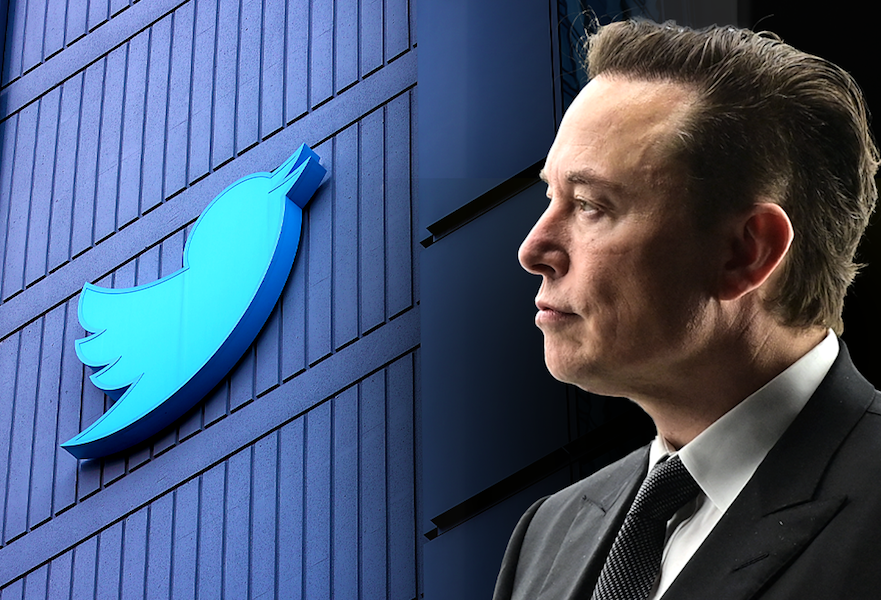
The Elon Era begins
After what was a rather lengthy and unpredictable few months of negotiations, Elon Musk has officially bought Twitter for a staggering $44 billion. With desires to turn the platform into a bastion of free speech, some major shake-ups have begun that will massively change the site’s functionality. Giving twitter a “digital town-square feel” might seem like an objectively appealing makeover, but there are some important considerations and unknowns following this transition that will have business leaders on the edge of their seats. With 50 out of Twitter’s top 100 advertisers already pulling their campaigns, it’s time to assess what the future of B2B social media marketing and advertising may hold.
What are the concerns?
Twitter has massively evolved since it began in 2006. Beneath all the memes, celebrity gossip and political discourse, the app itself has also become an extremely advantageous marketing and advertising platform for businesses. The ability to have an organic, direct line to your target audience has become essential for businesses’ marketing strategy. Now, Musk’s reign might threaten that with implications for businesses already causing concern.
Commercial accounts may need to pay subscription fees, a move that likely reflects Musk’s need to explore new revenue streams to help fund this colossal take over. For many larger B2B firms, this might be a small sacrifice to ensure access to an enormous pool of potential customers. However, smaller businesses who rely on organic advertising on Twitter – particularly during economically unstable periods when budgets are stretched thin – are at a huge risk if this comes to fruition. Engaging users, creating brand awareness, and sharing content is easily achieved on Twitter, that’s why 67% of all B2B businesses are on the site. Making this tool less accessible might be detrimental for thousands of organisations that can’t expend many resources on their marketing funnel approach.
Changes like this coupled with fears of the platform becoming a breeding ground for extremist content and hate speech, have prompted many businesses to consider moving their primary social media marketing activity toward other platforms like Tik Tok, Facebook and even some newer ventures like Mastodon.
Two immediate problems stem from this:
Firstly, in the last two years, almost three times more users engage in customer service conversations with businesses. Twitter is the favoured platform for audiences to discuss products, queries and learn about brands. Twitter is also a great platform for businesses to assess brands and can in part inform their decisions to buy products and services.
Other platforms, particularly Mastodon, simply don’t host the same levels of audiences. Despite Mastodon gaining 500,000 new users since the takeover, it is unlikely this platform will serve organisations to the same extent. Particularly for B2B marketing and advertising, Twitter is one of the favoured platforms. How long will it take for these new platforms to garner that same reputation?
What does the future of B2B marketing look like on Twitter?
Will Elon Musk’s sweeping changes drive away B2B businesses from advertising on the app?
. Musk himself tweeted that he wanted Twitter “to be the most respected advertising platform in the world”. But this hasn’t stopped certain brands from halting spend on their paid adverts as they wait to see what Twitter under Musk looks like. B2B businesses are right to be cautious of Musk’s takeover. A businesses’ brand identity and values are carefully curated and with Musk’s insistence on greater free speech and a more relaxed approach to disciplining users that violate rules, marketing chiefs may worry that these changes may tarnish their brand. Forty-two per cent of marketers are worried with Musk’s takeover citing concerns over brand safety and integrity.
However, with the potential for paid ads to reach up to 486 million users (and growing), businesses must consider whether they can afford to lose this massive audience. Businesses, and CMOs in particular, should also take Musk’s plans with a pinch of salt. Twitter relies hugely on paid ads and B2B marketing. Twitter’s ad revenue for Q2 of 2022 was just over $1 billion, making up more than 90% of its $1.18 billion revenue for that quarter. Even with his clickbait-worthy plans for the future of Twitter, Musk knows the value that marketing brings to the platform and will ultimately seek to protect this.
Change is always daunting and never without doubts. However, as it stands, businesses shouldn’t change their B2B marketing strategies too much. Twitter is a great platform to showcase your brand, form organic relationships and grow your audience and it’s unlikely this will change.
By Astor Sonnen, Senior Account Director, Technology
The Internet of Things (IoT) is a wide-reaching term but is most commonly used to refer to the masses of connected smart devices we all use at home, work and on our bodies to control lights, fridges, cattle or to monitor our health.
Unless you’ve been living in the middle of a field with no access to technology (or aforementioned cattle) IoT has almost certainly touched your life in some way. And that’s because whichever IoT stat you look at the numbers are mind boggling.
Global IoT spending could total £12tn between 2019 and 2025
In 2021, there were more than 10bn active IoT devices
Predictions say the number of IoT devices will surpass 25.4bn in 2030
By 2025, there will be 152,200 IoT devices connecting to the internet per minute
The IoT connectivity management platform market is expected to grow to £11.64bn ($12.84bn) in 2026
These stats ultimately show that technology will only grow in prominence and IoT market trends will continue to involve, becoming more encompassing of every aspect of our lives.
For organisations then, there is a real opportunity. A successful IoT deployment is the result of a number of factors coming together seamlessly: consultation, connectivity (including fixed and mobile), the devices, eSIMs, data management, storage and analysis, as well as critically, cybersecurity; (there were more than 1.5bn cyberattacks against IoT devices in the first half of 2021 alone). That is an ecosystem that can include a widespread eyvariety of brands.
Determine where you fit with an IoT Marketing strategy
You may feel that you’re not an IoT provider, but if you can offer a solution that is used within deployments – you are an IoT enabler. You just have to understand how you fit and engage with others in the ecosystem.
An IoT marketing strategy will help you to build your brand and show how you can collaborate with other organisations to bring deployments into reality. Similarly, it will showcase how you shape up against competitors who are vying for the same attention.
A sustained IoT PR campaign that gives you a voice in industry-wide conversations will put you on the map. From thought leadership articles in key titles and engaging with media around breaking news, to sharing relevant news on social feeds and speaking slots at industry events – the world will see your role within IoT and your influence will grow.
Ultimately, the IoT phenomenon is a huge – and growing – pie and organisations have the chance to build their reputation within specific aspects. You just need to understand where you fit and how to connect the dots with the right stakeholders – and that’s where we can help.
Why not have a chat with us about your IoT marketing strategy, and let us develop a bespoke IoT PR campaign that will keep you in the news and engaging with your key audiences. Get in touch.
For years, ESG issues have steadily been building credibility within the global financial sector but until more recently, the conversation has been met with some scepticism across Asia.
But with more consumers actively engaging with sustainability concerns, and central banks driving new regulatory frameworks, firms are now enthusiastically incorporating ESG considerations into their strategies. And in Singapore, this trend is magnified through its plans to establish itself as a leading market for green finance in Asia.
Following Africa’s launch of the African Climate Risk Facility at COP27 to help the continent’s most vulnerable communities deal with climate disaster risks, there have been widespread calls for countries in Asia to follow suit – especially in the wake of the devastating floods that have left Pakistan with $30 billion worth of losses this year.
And just last week, Singapore specifically moved to deepen its collaboration with the UK in a strengthening of the UK-Singapore Financial Partnership initially agreed in 2021, with sustainable finance priorities at the heart of discussions.
The countries have agreed to explore collaboration opportunities with partners based in Singapore, such as the Glasgow Financial Alliance for Net Zero’s (GFANZ) Asia Pacific office with the aim of driving international consistency in design and disclosure of transition plans.
And with the biodiversity COP starting this week, it’s encouraging to see the Monetary Authority of Singapore (MAS) driving forward action specifically related to natural capital, an often-overlooked twin to Net Zero initiatives. This is reflected in its new agreement to raise awareness of the potential for nature loss to generate financial risks through collaboration with partners such as the University of Cambridge Institute for Sustainability Leadership and the Singapore Green Finance Centre.
However, there remains an important learning curve for firms in Singapore to consider. A report published last month titled Asia Funds: Navigating the ESG Maze by law firm Morrison Foerster underscores the need for greater transparency in the region when it comes to living up to new sustainability commitments.
Almost seven in ten of the general partners surveyed for the report identified ESG criteria as influential when deciding whether or not to proceed with a potential investment. Yet less than half conducted the appropriate ESG due diligence on every investment, implying a lack of consistency between word and deed that must be challenged for Singapore to achieve its status as a hub for green finance.
ESG and sustainability have rightly become significant considerations for firms operating in Singapore. A combination of rapidly changing consumer expectations, who want to use their purchasing power for good and are consequently demanding more from the businesses they work with, and growing pressure from regulatory bodies, is driving Singaporean firms to action.
But in order to successfully lead from the front, Singaporean firms must be transparent about their business’ efforts. By choosing to embrace ESG issues and putting them front and centre of new business strategies, Singaporean firms have signed up to be scrutinised. And in order to thrive in this developing landscape, businesses in the region must reflect ESG values at their very core.
By Catherine Hunter, Account Director, Energy and Industrials
Ahead of England-France, it’s a difficult call as to who will struggle more: Maguire trying to keep a lid on Mbappe, or National Grid trying to keep the lights on. With a backdrop of a war in Ukraine and high energy prices, the traditional power system has been tested this year.
And another test comes this weekend, as France take on England in Qatar. But the challenge will be much closer to home – and on our electricity grid. Live sports events typically see a spike in electricity demand at half time. The further England progress through a tournament, the higher this spike can be at home. This is due to large parts of the country doing the same action (boiling the kettle for a calming cup of tea, opening the fridge for a celebratory beer, etc.) at the same time.
As we reach the knockout stages of the World Cup, we play a close neighbour in the power system. In fact, Great Britain usually imports power from France. This year though, France has had a number of nuclear power outages and has seen France become a net importer of electricity. This has coincided with Great Britain becoming an electricity exporter for the first time in a decade.
This trading relationship usually works pretty well between the two countries due to a different demand profile. In essence, France consumes more power in the morning, largely thanks to its industrial activities and Great Britain consumes more during the evening peak, due to home heating and eating. These can then be balanced out through the use of interconnectors so power can flow from one country to the other at times of need.
With a 7pm GMT kick off, the game starts during a peak in demand for those watching the three lions at home. However, as we can expect a surge in demand at half time, this will take already high usage even higher. This means we will need to be pulling in power from new sources. This could be met with the turn up of large gas power stations, or the use of peaking plants and battery storage. And there may be power flows through the interconnectors – it just depends on what is happening with our neighbours at the same time too!
Come the evening, we can be pretty sure solar won’t be online to help meet demand. But the “Greenland block” (a weather event where high pressure sits over Greenland and blocks other air masses reaching the UK) has caused high pressure over the UK. This results in low to no wind across the country. This means we can’t tap into the UK’s wind fleet – which only last month set a record of 20GW of power production – a little under half what could be needed on Saturday evening.
Regardless of the result, we can be sure that the control room at National Grid are in for an interesting night as they operate under any conditions to keep the lights – and crucially the TVs on – for the World Cup.
In France’s previous game, Giroud became the country’s top international goal scorer of all time, despite being written off time and again throughout his career as ‘not good enough’ or the backup option. National Grid might feel some kinship with the veteran striker, having been accused on annual basis of not being up to the task of managing the power system. Like France’s Mr Reliable, National Grid will be looking to prove the doubters wrong again at this World Cup.
We live and breathe the energy sector to support you in connecting dots across industry, get in touch if you’d like to hear more.
Picture this – it’s the final few months before your A Level exams. Not only are you nervous, sleep deprived and quite frankly fed up, but your plans for the future are a complete and utter mystery. This was exactly how I felt, and so did thousands of other Year 13 students across the UK, according to a recent study looking at how exam stress affects students.
It really wasn’t until the month before my exams that things started to fall in place. And for those reading who are currently in a similar situation, just hang on. Things will eventually work out.
Swooping in, like a giant mystical unicorn, coming to save me from all my troubles and worries, was the Aspectus Academy apprenticeship scheme. My career adviser (who I would recommend building a good relationship with if you have the opportunity) sent me this interesting role. As I begun reading through, I finally began to feel hopeful. This was it. This was exactly the type of role that I had been looking for.
PR and marketing had always been of interest to me, and I had finally found a company that I could see myself fitting into and excelling in. This was a perfect example of ‘going with your gut instinct’.
Don’t be disheartened
Of course, there will be times when you may not hear back from certain companies you apply to, or in some cases, make it so far into the interview stages, only to be told you didn’t get the role and that “you’re just not the type of person we are looking for.”
Fortunately for me, during the interview process at Aspectus, they were extremely helpful, and never made me wait longer than 24 hours for a reply when I had any questions.
What to expect once you get the role (and you will)
From a young age, I had dreamt of working in the city. I would imagine myself in an expensive suit, on the train commuting to a big office, and eating lunch at fancy restaurants. Sure, I don’t actually wear an expensive suit to work every day and the only thing I have waiting for me on the train is the usual, and quite unpleasant, smell of sweaty commuters (of which I could be one myself!) But that’s not the point. The point is, I had an image in my head of what I wanted my life to look like and that helped me find what I wanted to do. I stayed positive, which leads me on to my final point.
Staying Positive
Working at Aspectus, it’s difficult not to be positive. How can you not be when you’re surrounded by enthusiastic, happy, and hardworking people? I haven’t been at the company for long but the culture and atmosphere in the office is admirable. Here, there is no such thing as a ‘bad social media post’ or a ‘failed attempt at gaining a journalist’s attention’. These are all opportunities for us to learn and grow as individuals and develop as a team. If one opportunity didn’t go as well as you would have liked It to, it’s okay! The next might well be the perfect one. Try adopting this mindset when applying for apprenticeships too. If one doesn’t go to plan, the next one might go exactly your way. Always stay positive.
Persistence Pays
Searching, finding, and applying for an apprenticeship can be difficult. Building a good relationship with anyone who you believe can help make the process easier is worth it. If you have access to a career adviser, use them! These people are here to help you.
Finding out you haven’t made it to the next stage of an interview can be very demotivating. However, there are some positives you can take out of it. Think about the experience you have just gained. Now you know what an interview process looks like so you’re able to be much more prepared for your next one. You may have realised that it’s not as daunting as you might have initially thought and therefore next time, you’ll be more confident. If you’d like some in-depth tips on how to ace an interview, give this a read.
“Our greatest glory is not in never falling, but in rising every time we fall” – Confucius
In other words, keep trying! Continuing to actively look for apprenticeships even after being turned down is a great achievement in itself. If you have found your way to this blog, that already demonstrates your proactiveness.
The apprenticeship search: it can be tough, but you’re tougher.