



Measurable event ROI in 90 days
A 90-day framework to maximise brand visibility, media impact, and ROI from industry events
56% of B2B brands report unclear or zero ROI from event attendance
This guide shows you how to change that.
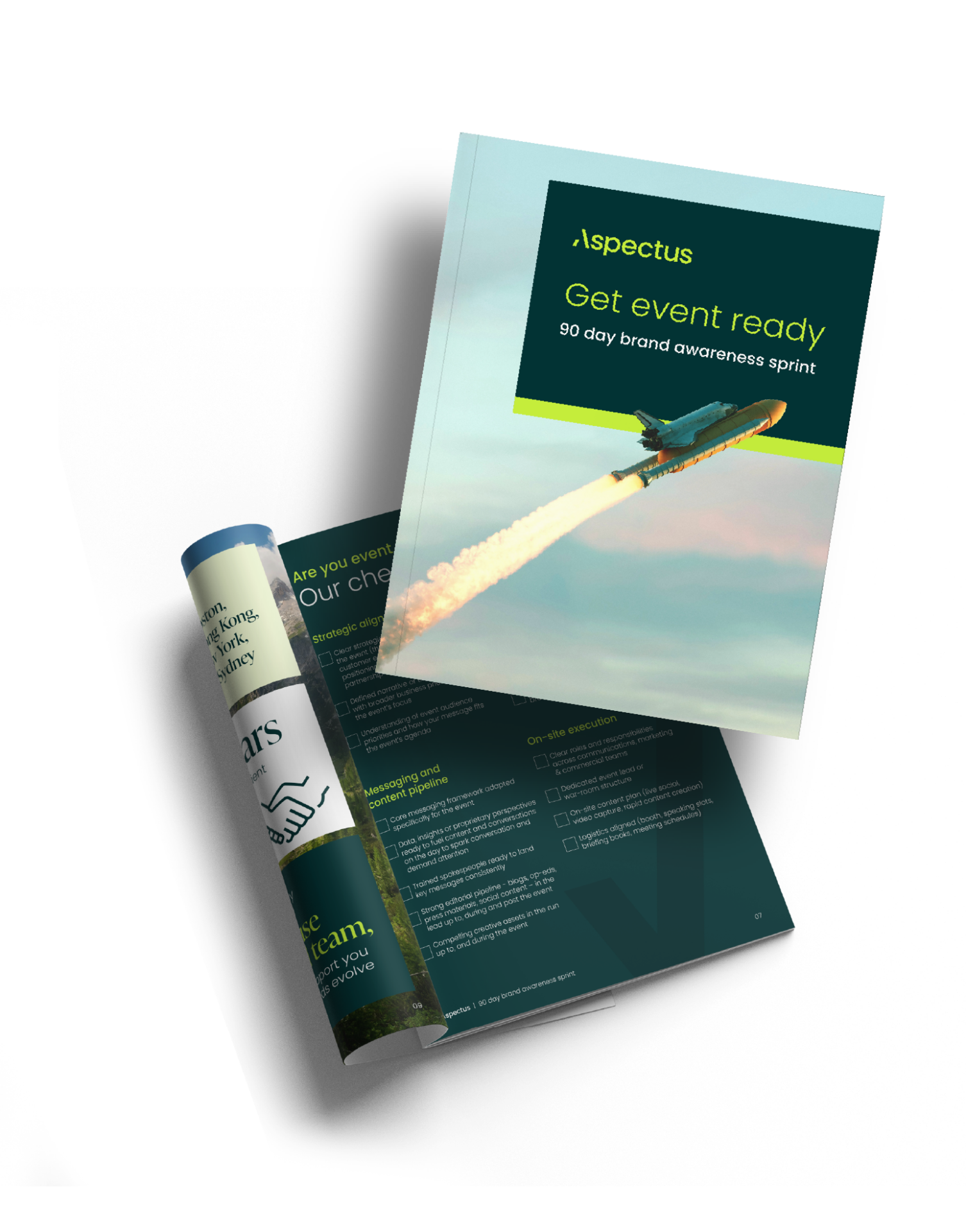
Download our Get Event Ready guide
Developed for senior communications and marketing leaders who need a systematic approach to event ROI.
What’s inside the guide:
- The three-phase event framework
How to build anticipation pre-event, maximise visibility during, and sustain momentum after - The event readiness checklist
Audit your approach across strategic alignment, media strategy, messaging, and execution - 90-day sprint programme
Six integrated components from messaging workshops to media training and content creation - Expected outcomes and deliverables
From narrative frameworks to LinkedIn templates and media asset toolkits
Download the guide
FAQs
Why do most event strategies fail to generate measurable ROI?
Many organisations treat events as discrete tactical moments rather than integrated strategic opportunities. Pre-event planning happens in silos but without a unified narrative or coordinated execution.
This results in: inconsistent messaging across spokespeople and channels, missed media opportunities, and post-event momentum that fades within days. The result: 38% of B2B brands report being unsure about event ROI, while 18% report none at all.
Our 90-day sprint framework addresses this by establishing integration from the outset – aligning strategic objectives, coordinating messaging, and building a content multiplication system before the event begins.
How do you align event strategy with broader brand and commercial objectives?
Effective alignment starts with defining clear strategic objectives before planning begins. Events should serve specific business priorities – thought leadership positioning, customer engagement, brand awareness, product announcements, or partnership development.
The key is developing a defined narrative that connects leadership messages to both business priorities and the event’s thematic focus. This narrative should cut across all channels: what executives say in panels, what spokespeople pitch to media, what social content amplifies, and what sales conversations reinforce.
Our framework ensures this alignment by bringing together communications and marketing to ensure alignment on key themes, differentiators, and proof points – ensuring everyone advances the same strategic narrative.
What makes the 90-day timeframe effective for event preparation?
Ninety days provides sufficient runway to execute build anticipation, maximise on-site impact, and sustain post-event momentum.
The pre-event phase requires time to develop messaging frameworks, train spokespeople, create content assets, and conduct proactive media outreach. Journalists need story angles pitched weeks in advance. Thought leadership content must be placed strategically to establish credentials before you take the stage.
This timeline also allows iterative refinement. Messaging can be tested and adjusted. Spokespeople can practise and improve. Media relationships can be nurtured rather than rushed. The 90-day sprint creates conditions for the event to feel like a peak moment in an integrated campaign.
Can this framework be implemented in-house or does it require external support?
The framework can be implemented in-house if you have the right combination of skills, capacity, and organisational alignment. Implementation success depends on several factors: writers who can craft compelling thought leadership, strategists who can develop media angles journalists care about, media trainers who can prepare spokespeople, creative talent for visual assets – and the bandwidth to execute.
Many senior leaders use the framework as a blueprint and bring in specialist support for specific components – media training, content creation, journalist relations, or LinkedIn coaching. Whether you implement internally, partner externally, or take a hybrid approach, the framework provides the strategic foundation.
How do you measure event impact beyond attendance metrics?
Attendance metrics – booth traffic, meeting counts, badge scans – tell you about activity, not impact. Measuring real impact requires tracking outcomes across brand awareness, media visibility, and commercial influence.
For brand awareness, track share of voice in event coverage, social media reach around key messages, and shifts in brand perception. For media visibility, measure quantity and quality: coverage volume, tier-one publications, whether spokespeople’s messages appeared, and thought leadership positioning.
For commercial influence, track pipeline activity: Did conversations convert to qualified opportunities? Did attending accounts accelerate through the sales cycle? Also measure long-term content performance – are event-generated assets driving engagement months later?
Our approach emphasises building measurement frameworks before the event begins, tracking leading indicators throughout the 90-day sprint.