


From Saudi Arabia to the world (and back)
By Astrid French, Head of Middle East, Aspectus Group
Saudi Arabia’s technology ecosystem is creating opportunities for local and international brands. This blog explores Saudi Arabia market entry, global brand building, startup growth, audience-led innovation and why businesses need to think beyond simply entering the Kingdom towards building lasting relevance.
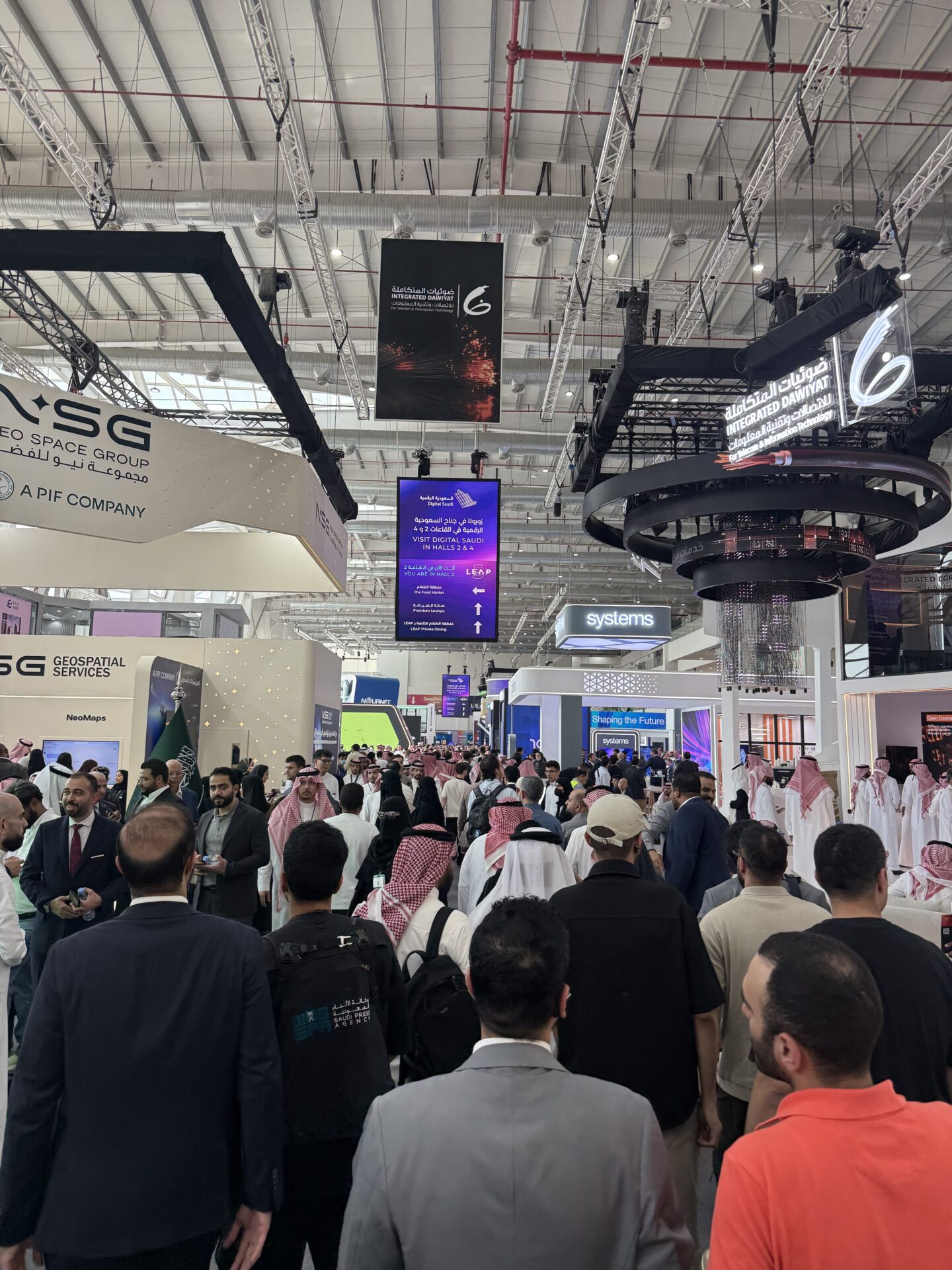
65,000 steps (my Whoop has requested I confess that’s a combo of mine and my colleague’s count) and more coffees than I care to mention later, and LEAP 2026 is complete.
Ask anyone who attended what it was like, and I can almost guarantee one of the adjectives will be: busy.
Wonderfully busy, I might add. After a pause in the Middle East event circuit earlier in the year, seeing halls packed out and the familiar hustle and bustle return brought a welcome sense of normality. But any marketer knows that busy means something else too…
A lot of competing voices.
And those voices were coming from all directions. International businesses are increasingly looking at Saudi Arabia and asking how they can become part of its growth story. At the same time, a new generation of Saudi businesses are looking beyond the Kingdom and asking how it can take its own story to the world.
For the brands building here, LEAP was a reminder of the incredible road ahead, but also that success requires navigating it carefully.
So in the spirit of LEAP turning five, here are the five things that stuck with me from the event.
1. The brand balancing act for Saudi brands with a global audience
For KSA-founded businesses with international ambitions, highlighting Saudi heritage is quite rightly a source of enormous pride. It’s part of their story, their identity and, in many cases, a major advantage.
But speaking with founders and marketers at LEAP, an interesting balancing act keeps coming up – how do you build a brand that is unmistakably Saudi without allowing geography to define its limits?
My view is that it certainly isn’t about diluting the Saudi story to make a business feel more international. Quite the opposite.
The strongest positioning makes that provenance mean something to an international audience. Saudi-founded, globally relevant. Rooted in one of the world’s most ambitious economies, but built to compete anywhere.
As more Saudi businesses look outwards, I suspect this will be one of the defining branding questions of the next few years.
2. Hold the valet, I’ll park in the Garage – Saudi Arabia’s startup ecosystem
360 immersive rooms. Walls that undulate. Robots in a boxing ring. A car you control by movement not touch. There was certainly no shortage of ‘mega-stands’. But honestly, my favorite area was the startup and scale-up section.
Anchored by a collaboration with The Garage – Riyadh’s startup hub – it felt like a delicious dose of Saudi’s entrepreneurial ambition in one room. An ambition that the numbers back up. Saudi startups raised a record $1.7 billion across 250+ VC deals in 2025, and more tellingly, 87% of those deals were at pre-seed or seed stage.
That’s a lot of businesses still at the point of defining not only what they do, but what they stand for, who they’re for and why their target audience should care. That makes this area particularly interesting for marketers.
3. Saudi Arabia market entry starts with understanding
There was another message at LEAP that was difficult to miss. If you want to be a part of things in the Kingdom, you need to take the time and care to understand it.
That doesn’t mean every international company needs a Saudi office tomorrow. Nor does showing up mean flying into Riyadh for a conference, collecting a few business cards and disappearing again. In my view, it means investing the time to learn the market, build relationships and, crucially, listen before deciding what you have to say.
That’s particularly important from a communications perspective. The Kingdom is moving at a unique pace and in a uniquely Saudi way which means assumptions imported wholesale from other markets just aren’t going to fly. With increasing international interest in bringing brands to Saudi Arabia, those that communicate most effectively will demonstrate their commitment to the market through how well they understand it.
4. Effective innovation often means meeting people where they already are
When we think about tech innovation, there’s a tendency to focus on creating something entirely new: new sectors, new systems, new platforms, new experiences.
But one comment at LEAP really stuck with me… ‘Some of the best technology innovation happens where people already are.’ à Rather than asking people to adopt an entirely new behavior, take a channel, experience, or need they already have and simply make it work better for then.
It’s a simple point, but an important one.
Innovation doesn’t always need to ask people to change their behavior. Sometimes the biggest opportunity comes from understanding existing behavior well enough to improve it.
And there’s a marketing lesson in there too. Understanding how people actually live, communicate, buy and consume information, and building your position within that is much more effective that trying to drive a wholesale system change.
5. Building for Saudi Arabia’s long-term opportunity
I’ll confess. This final takeaway isn’t my own.
It was the question used to close one of the discussions on LEAP’s VC/founder stage. The moderator asked three panelists which vertical they would be prepared to underwrite for the next 30 years.
Their answers?
Semiconductors.
Healthtech and longevity.
And, from the final panelist, none at all. His bet would always be on the founder rather than the vertical.
I’ll leave you to decide which answer you’d back. Or maybe you’d pick something different entirely?
But perhaps more pertinent than the answers was the question itself, which looked at the next three decades of trajectory. Naturally in Saudi, 2030 is a marker, and in the tech industry more broadly, attention is typically focused on the newest innovation. But conversations at LEAP went way beyond that.
Something much bigger is being built here. And in a market this busy and ambitious, relevance for international brands won’t come from simply adding Saudi Arabia as a pin on the map to the marketing plan.
You have to know what makes you distinctive, meet audiences where they are and earn their attention. A big part of that is thinking beyond a Saudi Arabia market entry strategy, and instead how you intend to stay for the long term.
Want to chat about how we can help you do that? Get in touch.
Key takeaways
What should international brands consider when entering Saudi Arabia?
Successful Saudi Arabia market entry requires more than establishing a presence. Brands need to invest time in understanding the market, building relationships and listening to local audiences before deciding how to communicate.
How can Saudi brands expand internationally without losing their identity?
Saudi heritage can be an international advantage rather than a limitation. Strong positioning connects Saudi provenance with a proposition that is meaningful and relevant to audiences worldwide.
What does Saudi Arabia’s startup growth mean for marketers?
A growing early-stage ecosystem creates significant demand for positioning, brand strategy and communications. Young businesses need to define what they stand for, who they serve and why audiences should care.
What can marketers learn from technology innovation?
Innovation does not always require changing audience behavior. Brands can create value by understanding how people already communicate, buy and consume information, then improving those experiences.
About the author
Astrid French leads Aspectus Middle East, and is responsible for overseeing its direction, fostering its growth, and cultivating strong client relationships. Her experience spearheading global, integrated communications programs is layered with a deep understanding of strategic nuances in the region. Astrid has worked with a range of clients, from energy supermajors and early-stage tech investors, to prestigious private banks.