



Branding on stage: Why events are driving the next era of thought leadership
By Natalie List, Associate Account Manager at Aspectus Group
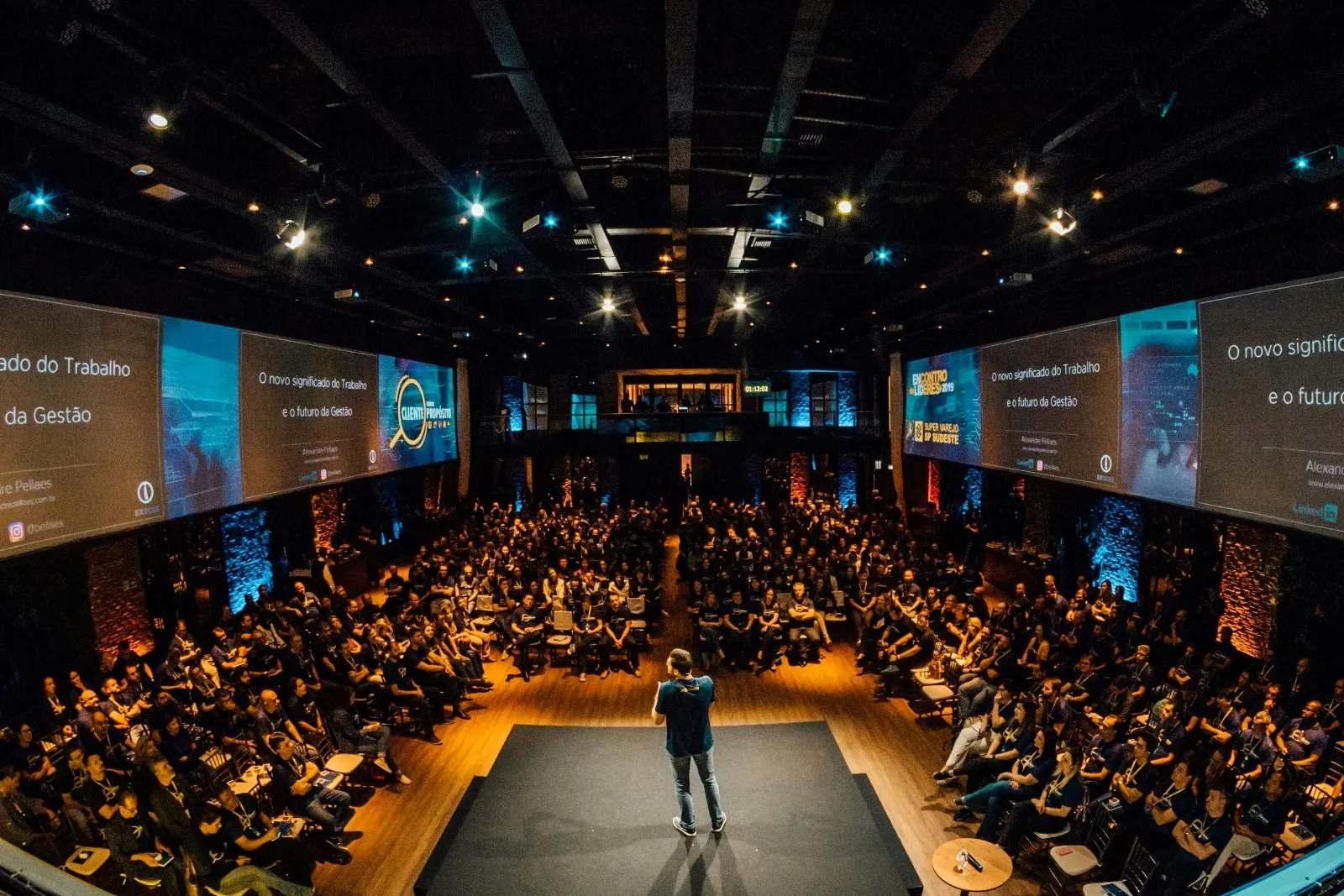
Industry events are redefining thought leadership for executives worldwide. From Davos to niche trade shows, conferences provide unique opportunities to build trust, credibility, and brand influence. With global event spending projected to reach $2.33 trillion by 2026, leaders who leverage panels, keynotes, and networking drive business growth and brand authority.
In the years since COVID-19, industry events have moved back into the spotlight – from interested attendees to speakers and sponsors, event interest and attendance have rapidly rebounded. The global events industry is projected to grow to $2.33 trillion by 2026, a 112% increase since $1.1 trillion in 2018. Events like Dreamforce, Red Hat Summit, and Davos, and even niche trade shows, offer unique experiences and opportunities to learn, engage, and connect with others on a technical level.
Furthermore, industry events are typically the breeding ground for some of the world’s greatest innovations, famous speeches, product unveilings, and industry gamechangers. What truly sets events apart is not the merchandise nor the company booths, but the attendees who contribute meaningful perspectives in the form of thought leadership.
In today’s dynamic and competitive environment, creating meaningful content and thought leadership material is not as simple as writing a LinkedIn post or paying for a sponsored article. Modern thought leadership strategies rely on true connection, value, and innovation; and events are an important vehicle through which this can be achieved.
But this raises a few questions: What exactly is thought leadership? Why does it matter? How can PR teams be instrumental in crafting valuable thought leadership? Where can it truly shine? Most importantly, how can brands prepare executives to deliver impactful presentations and ensure those insights connect back to the company’s broader story?
What is thought leadership?
Despite sounding complex, thought leadership can be broken down very simply. Let’s start by going back to the basics. The definition of thought leadership, according to Cambridge Dictionary, is “the activity of influencing other people with your ideas and opinions on a particular subject.” Educating oneself on a topic and sharing insights in a public forum is thought leadership, and it is an important tool to have.
Why does B2B thought leadership matter?
One’s voice is only as strong as their credibility, and one’s credibility is only as good as one’s voice. For example, imagine you go on a fishing trip. You head out into the water with your captain, and suddenly you find out they’ve never been fishing. Immediately, your trust in them – and the chance that you’ll actually catch any fish – is greatly diminished. Why would you trust someone who has no experience or knowledge in what they speak about?
In order to gain an audience’s or customer’s trust, it’s essential to prove that you know what you’re talking about, and you truly are an expert in your field. Creating thought leadership content is a key way to do this.
Beyond proving your expertise in a subject, being a thought leader means you are upholding your business’s brand – which is an essential part of selling any service in the modern world. Especially in B2B technology and financial services, businesses need a comprehensive and consistent brand voice to stand out from the crowd, and this can be driven by thought leadership content.
Read more to learn about Why fintech vendors must build brand to drive long-term leads
Building a valuable thought leadership program also relies on being loud. In an overly crowded market, it’s essential to share your message and be heard. There are thousands of subject matter experts, but the ones who are regularly sharing insights and expertise with the right customers, partners, and investors are the ones who are going to be trusted when it comes to decision-making time. The ultimate goal is to become an authoritative voice in your brand’s category by regularly showing up in the sector conversations in earned media and on stage at industry conferences.
Where does my PR agency come into play?
The role of a public relations team and integrated B2B agency is essential to the success of a thought leadership campaign. PR people act as liaisons between an executive’s brain and journalists who need outside sources, the publications that want to feature creative content, and the customers who are reading the most important trade magazines.
PR teams not only impact the distribution of credible expert commentary, but they play an important role in shaping what this thought leadership looks like. As seasoned media experts, PR professionals are tasked with knowing what information might be valuable to which sources, and ensuring the commentary aligns with an executive’s company brand. Just because a topic is trending in the media does not mean that it aligns with a company’s brand and warrants an article. PR teams ensure quality always sits above quantity when it comes to content creation.
Read more to learn about 5 PR and marketing trends defining 2030: Trust, AI, GEO, and the future of brand strategy
Where does thought leadership shine?
The traditional format of thought leadership is often considered to be opinion editorial pieces that are published in trade or nationally syndicated publications. This content typically offers expert insights from executives and actionable takeaways so readers can understand a topic on a more technical level and implement it themselves.
But the market is becoming more crowded – in the past 17 years, the number of reporters at newspaper newsrooms has declined 60% and since 2005, there has been a 40 million decline in combined circulation of the 500 largest US newspapers. While there are fewer publications and fewer reporters to speak to, there has been a vast increase in the amount of news to cover with growing populations, global connectedness, and an increasingly online world. PR professionals can help you develop strategies to break through the noise.
To stand out in the crowd, executives need to explore industry events as a key outlet to share insights, connect with other leaders, and drive innovation forward altogether.
Events + thought leadership = brand success
Industry events are fertile ground to promote your brand – but this must be done in moderation and doesn’t happen overnight. Event thought leadership is a multi-pronged approach that must be managed carefully and consistently.
First, it is essential to look beyond the obvious – you do not need to present or speak publicly at an industry event to share thought leadership. True thought leadership can come in many forms, and a post-event insights article can be just as valuable as a keynote presentation, when done correctly. Executives should attend industry events with the goal in mind to connect with other experts, gather important, industry-wide insights, and prepare to disseminate those insights to not only internal stakeholders and team members, but journalists and readers who are watching from the sidelines.
Industry events are also networking opportunities for executives to connect directly with journalists in their space. Setting up pre- and post-event interviews can be extremely valuable in nurturing relationships and building rapport. Even more, preparing executives to speak directly with journalists at events through focused media training can be extremely beneficial. PR professionals are key to not only securing these opportunities and sharing word with journalists that executives will be attending, but also in preparing executives to think on their feet and share thoughtful insights that align with key brand messaging.
Why brand voice matters – and how thought leadership builds it
Trust is the cornerstone to brand-building and recognition, and brand voice is the cornerstone to any successful business. Creating the best product and being the loudest in a market can only get companies so far – but when it comes down to B2B buyers deciding what company will provide exceptional results, they look to those with brands they trust. In Salsify’s 2025 Consumer Research report, 87% of customers said they will pay more for products from brands they trust – and this sentiment resonates across B2C, B2B, and B2B2C.
Integrating thought leadership – from social media content to attending industry events – into brand strategies is a core component of a successful PR campaign. When considering how to kickstart thought leadership, specifically in the form of industry events, the following steps are key: define your audience, align with your brand, and don’t overlook any opportunity to share expertise. When thinking about industry events, the big ones tend to come to mind – but sometimes the smaller, local events are the ones where the biggest impact can be made.
Read more to learn about top tips for developing an effective technology event communications plan
Are you ready for this year’s industry events?
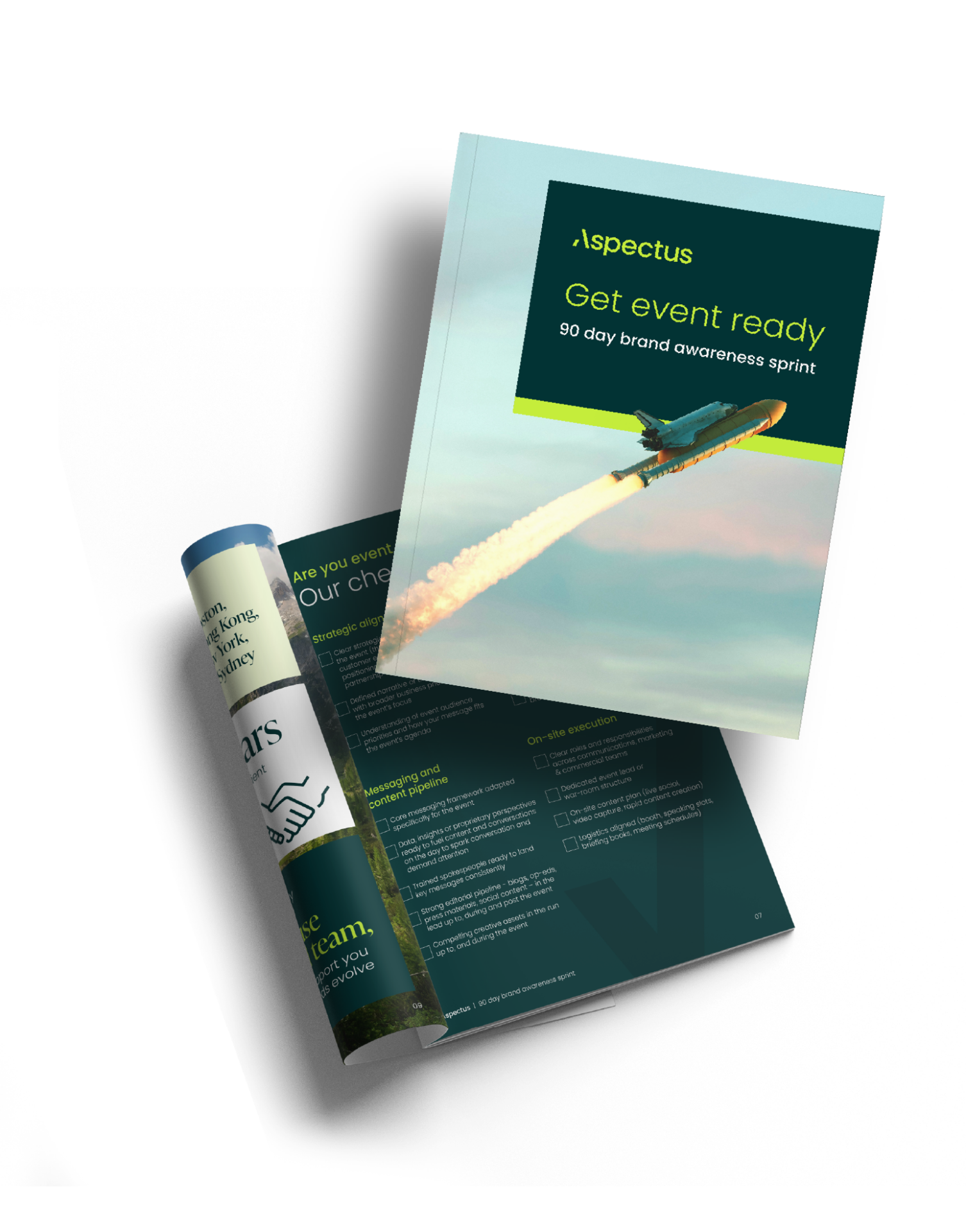
Download our Get Event Ready guide:
This 90-day brand awareness sprint is designed to help you:
- Build a consistent brand story across every channel
- Equip and elevate your spokespeople
- Deliver an event strategy that maximises impact before, during and after attendance
- Increase media visibility and engagement
- Strengthen overall event ROI
About the author
Natalie is an Associate Account Manager at Aspectus Group, specializing in media relations and strategic communications for financial services, energy, and B2B technology brands. With a strong background in enterprise tech, she supports day-to-day execution of high-impact campaigns, securing earned media that reinforces brand positioning and builds credibility. Natalie is skilled at crafting narratives that align with client messaging and resonate with key journalists. She is based in New York and holds a BA in Media Studies and Women & Gender Studies from the University of Virginia.
Key takeaways
Why are industry events critical for thought leadership?
Events provide direct opportunities for executives to showcase expertise, connect with peers, and build credibility in real time.
How do events impact brand trust?
Speaking at conferences signals authority and transparency—two essential pillars of brand trust in today’s competitive B2B markets.
What role does PR play in executive visibility at events?
PR teams secure speaking slots, prep executives with media training, and align insights with brand messaging for maximum impact. o competitors based on a key attribute that matters to customers and proves its superiority.