


Why showing up isn’t enough: making events matter in 2026
By Kirsty Howe, Director, Aspectus Group
As AI automates more of how we work, from inboxes curated by Copilot to meetings transcribed by silent digital assistants, it’s tempting to believe connection has become effortless. But for anyone who has stood in a crowded conference hall, coffee in one hand, pastry in the other and a name badge half-hidden by a blazer, knows the truth: none of that technology helps when you’re deciding who to approach, how to introduce yourself, or how to make a fleeting conversation count.
One of the most interesting cultural shifts expected this year is a quiet move back towards analog. A TikTok trend – irony very much acknowledged – that champions slowing down, owning physical media, and spending more time offline and in real life (IRL).
That same instinct is playing out in the events world. As AI accelerates how we connect online, the value of in-person moments is quietly rising. The Reuters Institute of Journalism recognises this trend – online and physical events are becoming increasingly important as part of a diversified revenue strategy. Events are no longer just about attendance; they’re about impact, and about being remembered once the lanyards are packed away and the LinkedIn requests slow down.
This isn’t an anti-AI article. If anything, it’s a reminder that as digital communication becomes more efficient, the analogue moments start to matter more. And for communications and marketing teams, events remain one of the few places where relationships are built, not automated.
The difference between showing up and standing out
The events calendar for the year ahead is already packed. From the World Economic Forum kicking off the year in January, to MoneyLIVE in March, Money 2020 in the spring, followed by Sibos and various big climate conferences, including New York Climate Week and COP31, later in the year. Organisations that we work with are committing serious time and budget to being present in the room. Yet what we see, time and again, is that presence alone isn’t enough.
Preparation often stops at logistics. Flights booked. Panels confirmed. Booth designs signed off. But when it comes to clarity – why you are there, who you want to speak to, or how they want to be perceived – things can quickly become vague. And vagueness lacks memorability.
It may be a communications 101, but it’s often missed when it comes to events. The most effective event strategies start with a simple question: why does this matter? Not to your internal stakeholders, but to the people you want to meet – your buyers. If an audience can’t quickly understand who you are and what problem you solve, no amount of visibility will compensate.
The case for a strong elevator pitch
Events compress conversations. You might meet five potential partners in half an hour, each interaction shorter than the last. In that environment, clarity becomes currency.
A strong elevator pitch isn’t about sounding rehearsed or sales-led. It’s about being able to articulate, simply and confidently, what you do and why it matters – (think 30 seconds or less!) The best ones don’t try to say everything. They invite curiosity, leaving space for a genuine conversation to build.
And like any skill, it improves the more you do it. However, what lands in January may need refining by June. What works at one event may fall flat at another. Use every event as an opportunity to refine and build based on what worked well last time, and what didn’t.
Putting a name to a face
Those brief, well-judged introductions matter even more when the conversation is with the people who shape public narratives. Media relations has always been rooted in relationships, and while much of today’s engagement happens via email or on the phone, face-to-face interaction still carries weight. Events offer rare opportunities to put a name to a face, introduce spokespeople in context, and build trust - the kind that’s difficult to establish through inboxes alone.
Why presence still matters
As technology continues to streamline how we work, the moments that can’t be automated are becoming more valuable. Events sit squarely in that space. They reward connection and the opportunity to really get to know a brand or business.
In a year where AI is already dominating the agenda and will likely do more of the talking, the organisations that stand out will be the ones that know how to show up and make an impression on their audience, so that next time, they are recognised, remembered and ultimately recalled when it’s time to buy.
Ready to get started?
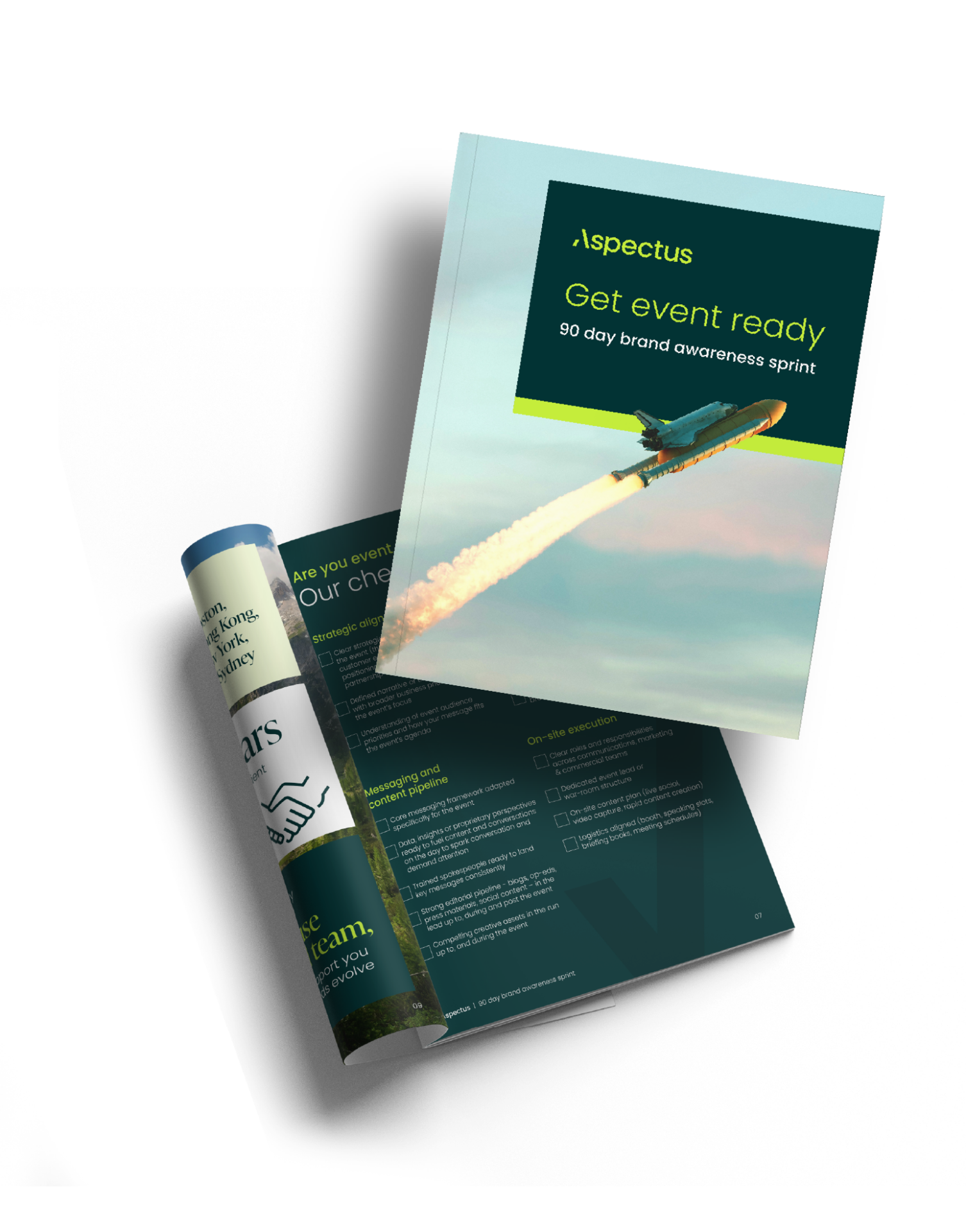
Download our Get Event Ready guide:
This 90-day brand awareness sprint is designed to help you:
- Build a consistent brand story across every channel
- Equip and elevate your spokespeople
- Deliver an event strategy that maximises impact before, during and after attendance
- Increase media visibility and engagement
- Strengthen overall event ROI
Key takeaways
Why isn’t simply showing up at events enough?
Without clear purpose and strategy, presence lacks memorability. Audiences need to immediately grasp who you are and why you matter.
What makes a strong event strategy?
Knowing why the event matters to your audience, not just internal plans — and tailoring interactions to match that.
How should organisations refine their approach?
Practice and iterate elevator pitches, focus on meaningful IRL engagement, and treat each event as data to improve future performance.
About the author
Kirsty Howe is a Director in our financial services team based in our London office.